CivTech and PortF: creating the world’s first 360 benefits realisation system
At a glance
The problem
How can we use technology to predict and measure the impact of projects and investments?
The solution
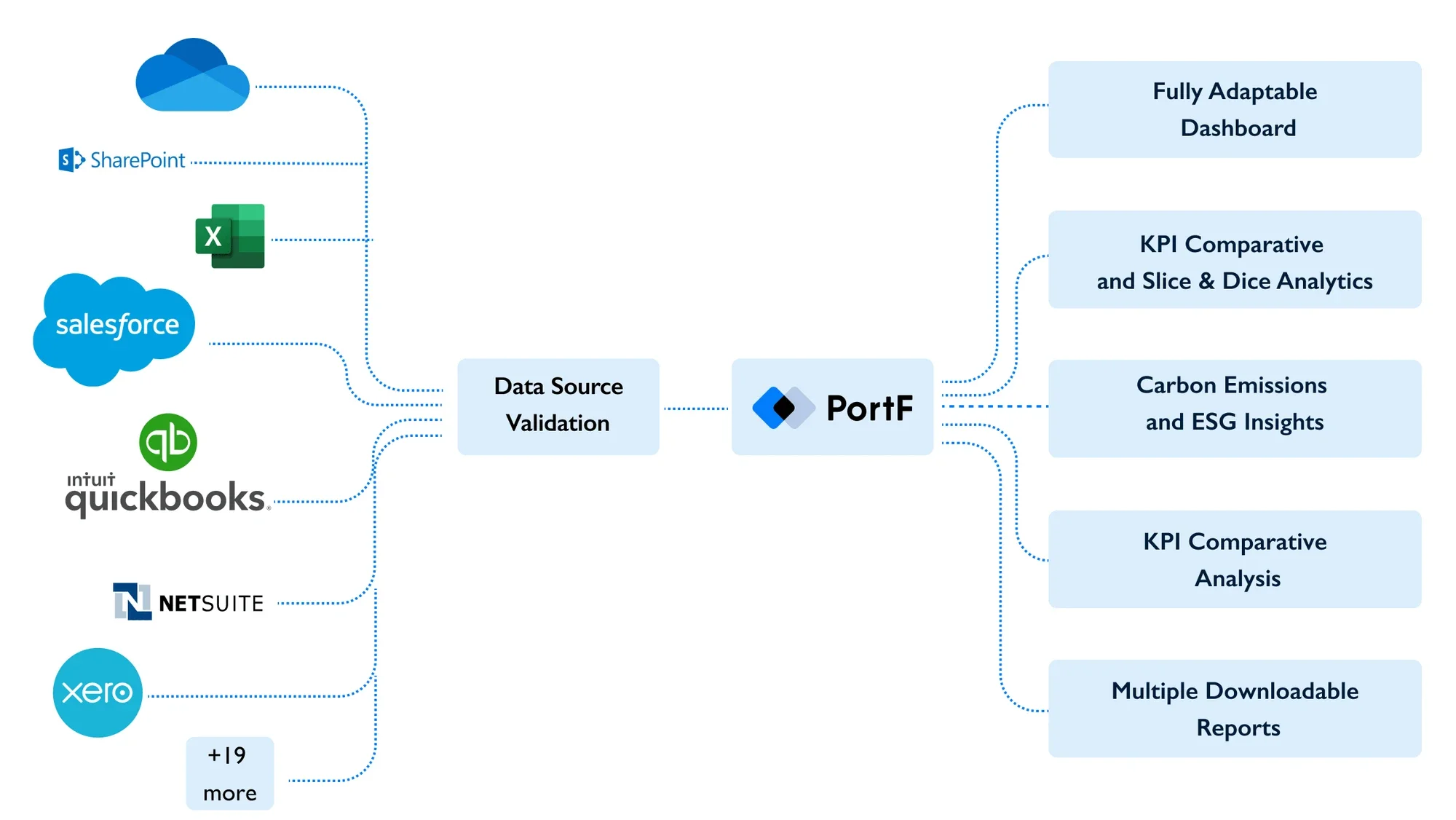
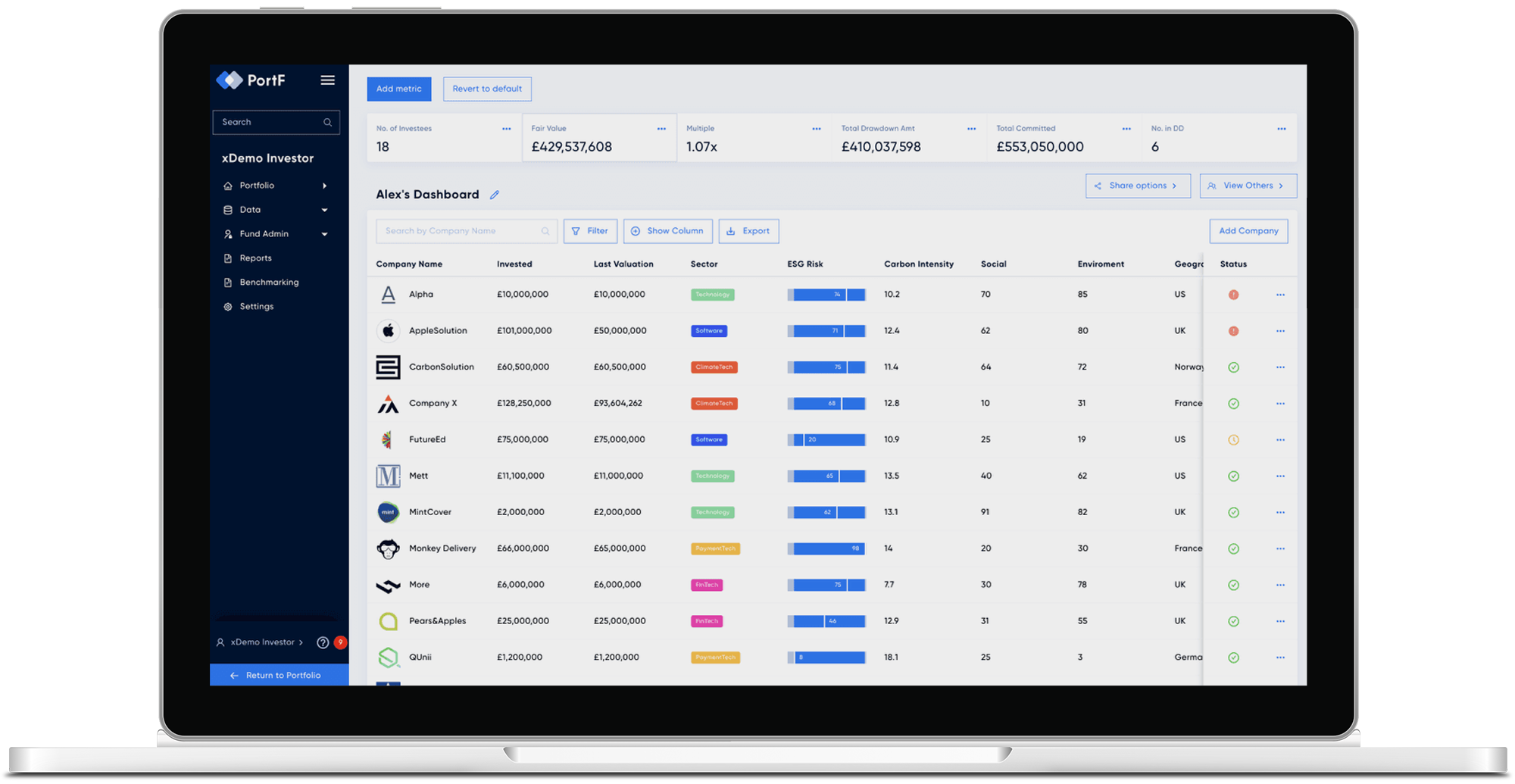
PortF unifies portfolio data into a single connected view, delivering real-time insights, AI-driven workflows, and seamless integration with existing systems.
Challenge Sponsors
Social Investment Scotland, The Scottish Government
Company website
Weirdly, there’s a problem with benefits…
Right across the world huge numbers of initiatives, programmes and projects win funding on the promise of outcomes and outputs. In other words, benefits. And every one of them is supposed to report back on its results. The problem is many don’t…
Sure, there will be a few that don’t want to report for whatever reason. The vast majority do make the effort, but it’s not easy. While some outcomes are easily defined — cost savings, efficiencies gained — many are far harder to nail down. And it’s often much easier to talk around benefits in general terms rather than commit to specific numbers.
But numbers matter. With tighter budgets and rising expectations, organisations need clear evidence of impact. Yet in the public sector, many outcomes are complex and nuanced, making them difficult to convert into simple financial measures — and that can make reporting a challenge.
That’s why many public‑sector projects turn to consultancies. But this support often comes at a high cost, and the methods used can feel like ‘black‑box’ exercises that reveal little about a project’s real value. Because their systems are usually opaque, it’s difficult to understand the numbers, how they were calculated, or what evidence underpins them. And because of this lack of transparency, trust is low. By the time consultancy reports arrive, it's usually long after the project has moved on - leaving no opportunity to adjust course or improve delivery in real time. It’s difficult to steer a project when you don’t know where you currently stand. That’s why people often fall back on talking about benefits instead of evidencing them, and why some reports feel disconnected from reality. When this happens repeatedly, projects falter and confidence in institutions is undermined
Imagine instead a system that gathers, tracks, and evaluates benefits realisation. In real time — transparently, efficiently, and credibly.
Well, now you can!
CivTech, the 360 Bottom Line, and PortF
From day one, CivTech recognised the need to rigorously track its own outcomes. – especially as it was an edgy, innovative, novel project. So, we developed a robust, analogue approach built around our unique ‘360 Bottom Line’ -capturing a Challenge’s full economic and societal impact. It caught the imagination of CivTech’s funders, who asked us to digitise the approach…
In reality, we had already launched a Challenge with co-sponsor, Social Investment Scotland, asking how can we use technology to predict and measure the impact of projects and investments? We were looking for a robust, streamlined and user‑friendly way to forecast impact when planning future work, and then track outputs and outcomes as they developed — giving us a full picture of CivTech’s impact from start to finish.
The PortF platform was born…
An easy way for organisations to predict, track and report benefits. It works for grants and investments alike, covers all three international impact‑measurement approaches, and can handle almost any output. It simplifies monitoring, data collection and analysis, and aligns with frameworks including The National Performance Framework (NPF).
It’s a one-stop benefits realisation system, that is — to quote one user — ‘so easy, my mum could do it’
So finally, we can stop talking about results and put numbers against them.
Lessons Learnt
Breaking the product down: sometimes problems are so big they seem unsurmountable. One of the best ways to tackle these is to break them down into ‘bite sized’ chunks [even if the chunks are still pretty challenging!]. We wanted a system that could track both economic and societal benefits. We built around the economic metrics, which were somewhat easier to tackle, and then built on that experience to tackle the societal angles. Which means…
Innovation is not always an instant process: sure, we’ve had some Challenges to which the solutions emerge from the Accelerator or very soon after. But often really good things take time to come to fruition. It’s a question of going as fast as possible without taking short cuts or losing quality.
Human in the loop: despite our desire to make benefits tracking as easy as possible, the ‘human in the loop’ is still the critical part. Societal benefits [unlike the economic outputs] are going to be different for every Challenge, and it’s a question of judgement, intuition and experience that will identify these.
“Using PortF has reduced data collection time by 75%, and post data collection analytics by 50%. PortF takes the pain of manually chasing reports and data entry out of tracking project benefits.”
Lyn Gellatly
Programme Delivery Manager, CivTech
About the company
Founded by Alex Lu and Tom Whale — combining deep finance and technology expertise — PortF is dedicated to building the world’s leading monitoring system for projects, programmes, and portfolios. Its platform eliminates data silos, reduces manual workload by up to 90%, and delivers fast, actionable insights.
Its clients include the Scottish National Investment Bank, First Port, Fair4All Finance, Pinsent Mason, BGF, Deepbridge, Gresham House, Praetura Ventures — and of course, Social Investment Scotland and CivTech.

Alex Lu
CEO

Tom Whale
CTO
Benefits
Huge productivity gains for public sector organisations: PortF increases data collection efficiency, significantly easing repetitive and mundane workloads, freeing people to do more productive and meaningful work, leading to -
Significant time and cost efficiencies: no more costly, time consuming and retrospective consultancy exercises, leading to
Real-time, in-programme management gains: with timely reporting, programmes and projects can track progress and adjust when required – not after the fact.
Hard facts mean more confidence in initiatives: robust evidence supports stronger public‑sector and citizen confidence.