
Ten years of CivTech
2026 is a landmark year for CivTech - not only the tenth anniversary of the programme, but the moment we transition from our 2021–26 programme into full Business as Usual operations. It’s a turning point that highlights just how far the initiative has come: from a small experimental team to one of the world’s leading models for public‑sector innovation.
To mark this moment, CivTech Director Mark Elliott reflects on the ideas, values and collective effort that have shaped the journey so far. Rather than a chronological history, this piece offers an insight into what truly powered CivTech’s first decade, and the relentless commitment to delivering better outcomes for citizens that continues to drive the work ahead.
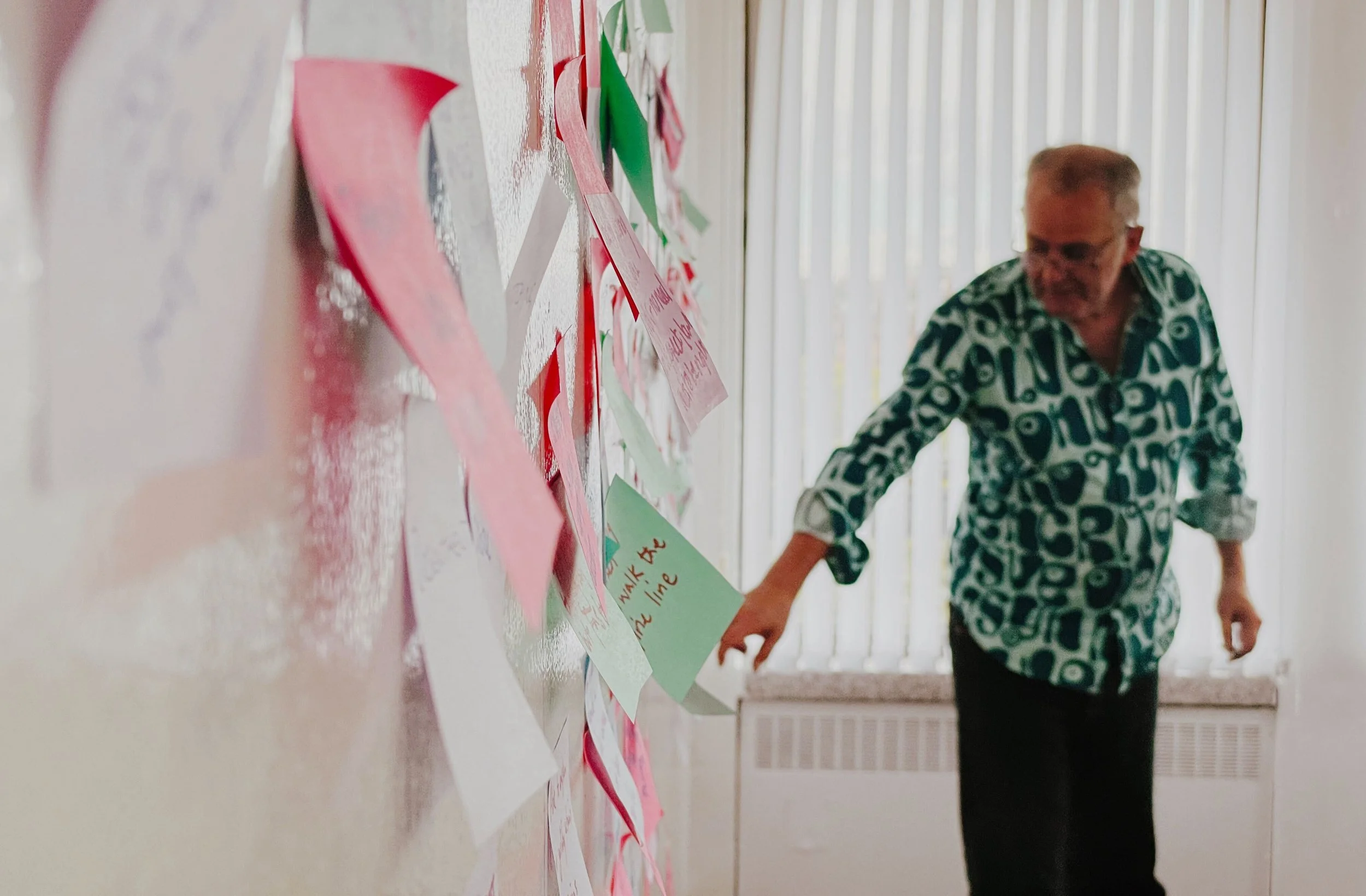
Mark Elliott, CivTech Director, delivering a workshop to our Accelerator companies.
To be honest, I’m not much one for anniversaries. I’ve long stopped marking my birthdays. I have to be nudged about my kids’. And the only one I dare not forget, never, ever, is my wife’s. So when people pointed out that CivTech was marking its tenth anniversary at the start of 2026, and that I might like to write something, my first reaction was: “Why?”
Because the simple fact is CivTech is never anything less than full-on. As soon as one Accelerator finishes another kicks off. Yes, we rigorously do retrospectives but they’re laser focused on improving whatever we can, because we’re always looking forward. And with up to thirty post-Accelerator companies in full commercial development, there’s never a let up. Plus, we also subscribe to the mantra that it’s always Day One, because slipping into a Day Two mindset is the fastest route to stagnation. So, apart from those retros, what’s the point of looking backwards? Then someone pointed out there was also another date worth pausing for. March 2026 marks the end of the CivTech 2021-26 programme and the start of ‘Business as Usual’ for the CivTech Division...
Maybe it is time to take a breath, look back, and see how far we’ve come. And it is a long, long way.
This is, unapologetically, a very personal account. I’m not sure I can write it any other way. And rather than a day-by-day, year-by-year account of how things went, it’s a reflection on what made CivTech so effective. And paradoxically for a ‘personal’ piece, at the heart of it all is a story of collective effort across a decade.
Here goes...
Let’s start with a singular fact. There’s no doubt CivTech is a success story. It’s now regarded across the world as not just the first ever public sector focused accelerator, but by a clear margin the most successful. We’re regarded as the gold standard in public sector innovation, with requests from around the world (now arriving almost weekly) for advice and support.
The great results delivered through our Challenges and by the CivTech companies are honestly too many to list. But here are just a few.
The Digital Mailbox is underpinning the Scottish Government’s work to create a single, secure and robust communication and engagement channel for every Scottish citizen - going from Challenge to delivery in under two years
Amiqus has taken the onboarding of new recruits from five weeks to under a day and is now widely used in organisations across Scotland and beyond.
ePass is revolutionising licensing with a single, easy-to-use platform for the 160 or so licenses people might need to apply for

Joe Tree, Head of the CivTech Accelerator, with the ePass team.
HomeLINK’s IoT systems have triggered the largest roll-out of connected housing technology across social housing in the UK, starting in Stirling.
Whereverly is building brilliant digital tourism growth and management tools for locations across Scotland.
Supply25 is making supply chains safer and more secure for procurement, while saving significant time and money along the way.
Novoville has transformed tenement maintenance - first with the City of Edinburgh Council, and now far wider
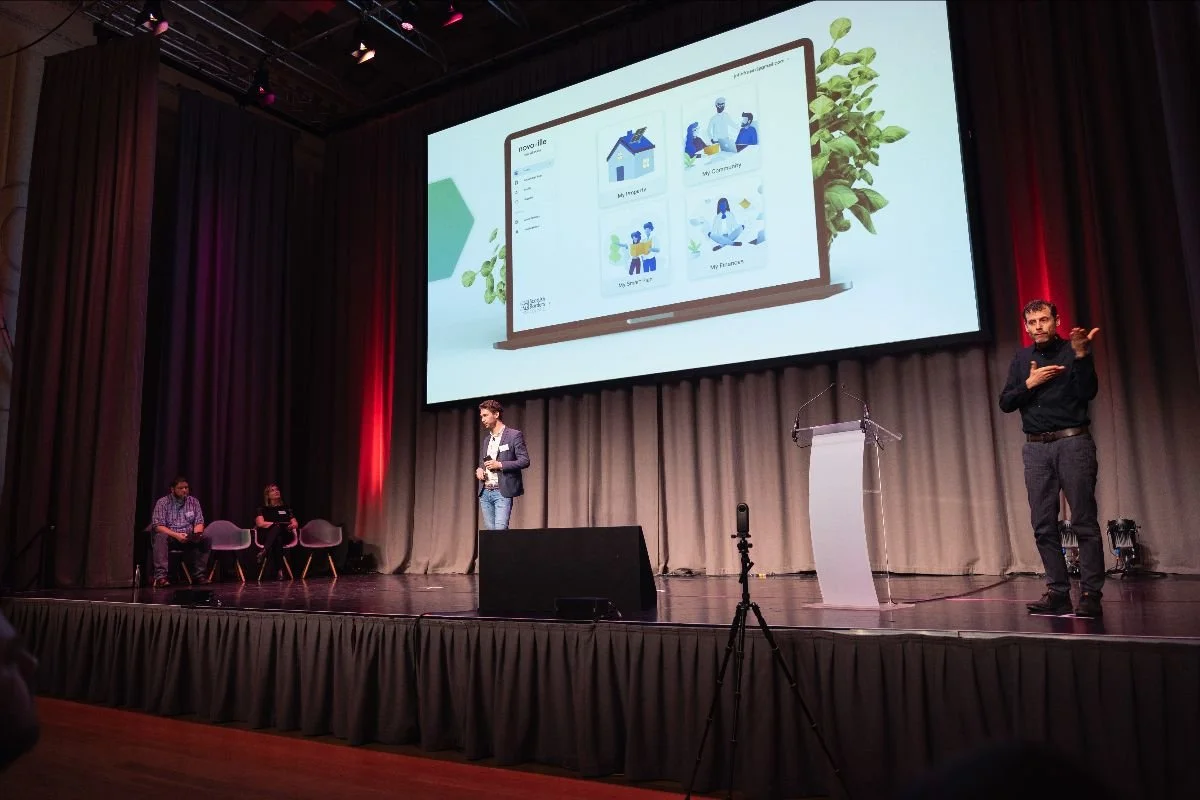
Novoville pitching on stage at CivTech Demo Day.
RiverTrack has created an extraordinary early flood warning system that small and rural communities can afford, install and manage themselves
And Forestry and Land Scotland’s work with Tape4Trees that’s completely revolutionised the tree growing industry.
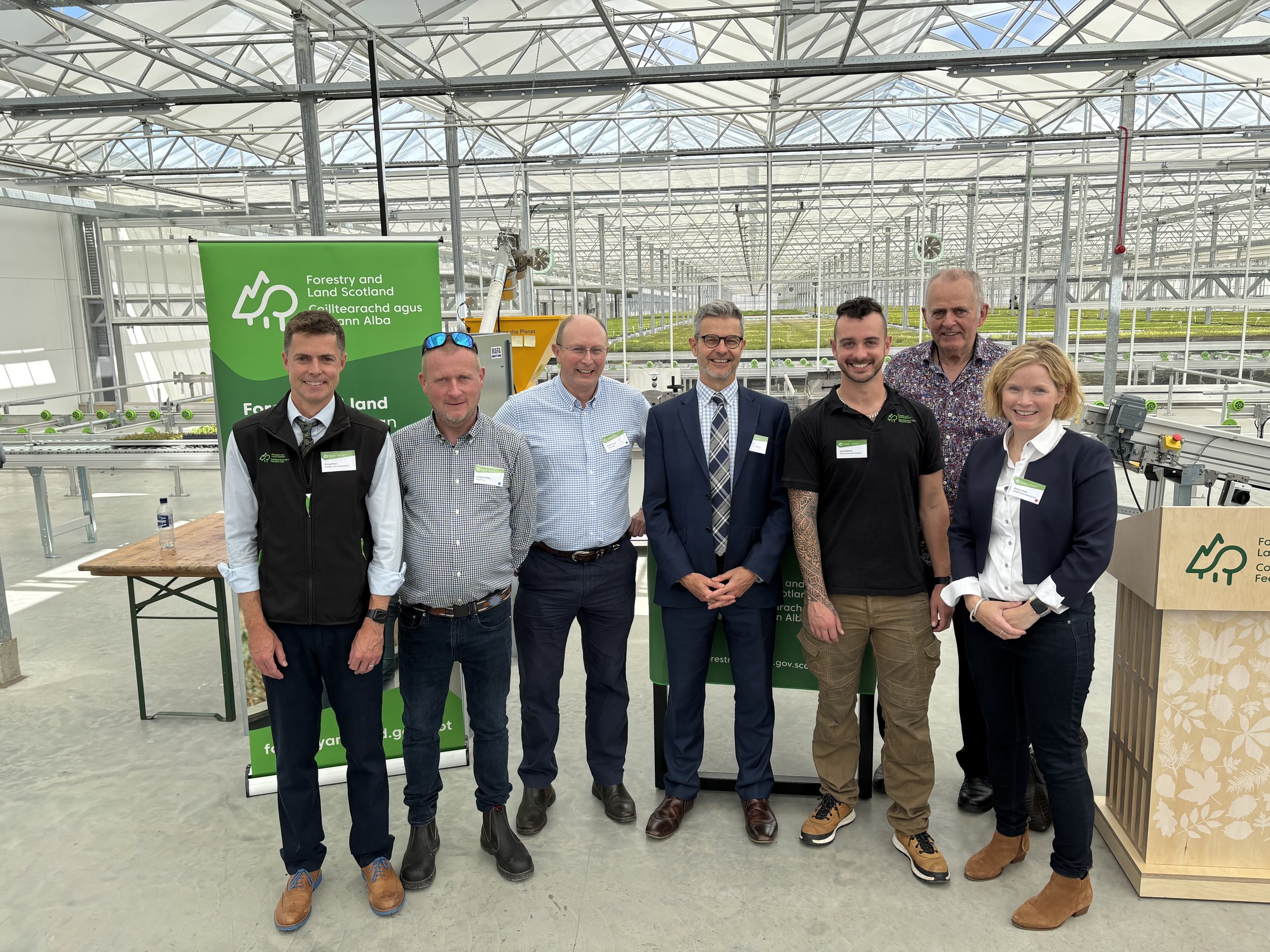
Barbara Mills, CivTech Deputy Programme Director (far right), with Mark Elliott (second from right), pictured alongside colleagues from Forestry and Land Scotland and the Tape4Trees team.
Many of these – and many more – are featured in our growing online case study pages.
The bottom line is the vast majority of the Challenges we launch produce viable products, and well over 80% are out there in the wild. That’s a complete reversal of the private sector accelerator percentages, and something Scotland can be proud of.
But how did we get here? What has driven CivTech over the last ten years? What are the foundations of what we’ve achieved? I think it comes down to a small number of things…
Getting things right at the outset…
When we launched, we were dealing with concepts and ideas that weren’t well understood in the public sector. Accelerators for example weren’t part of the conversation. but we didn’t go in blind on this. The team had experience of the first ever tech accelerator in Europe, back in the day when there were just four or five in the world, all in the USA. The team also had deep experience of business start-up and scaling. Not to mention innovation itself.
So, we were able to design a model we believed would fly. And while someone remarked at the start of CivTech 1, “probably only half of this might work, and that’s a good thing” [we were, after all, innovating on innovation] we had the basics right from the off. More than half worked - and we took flight.
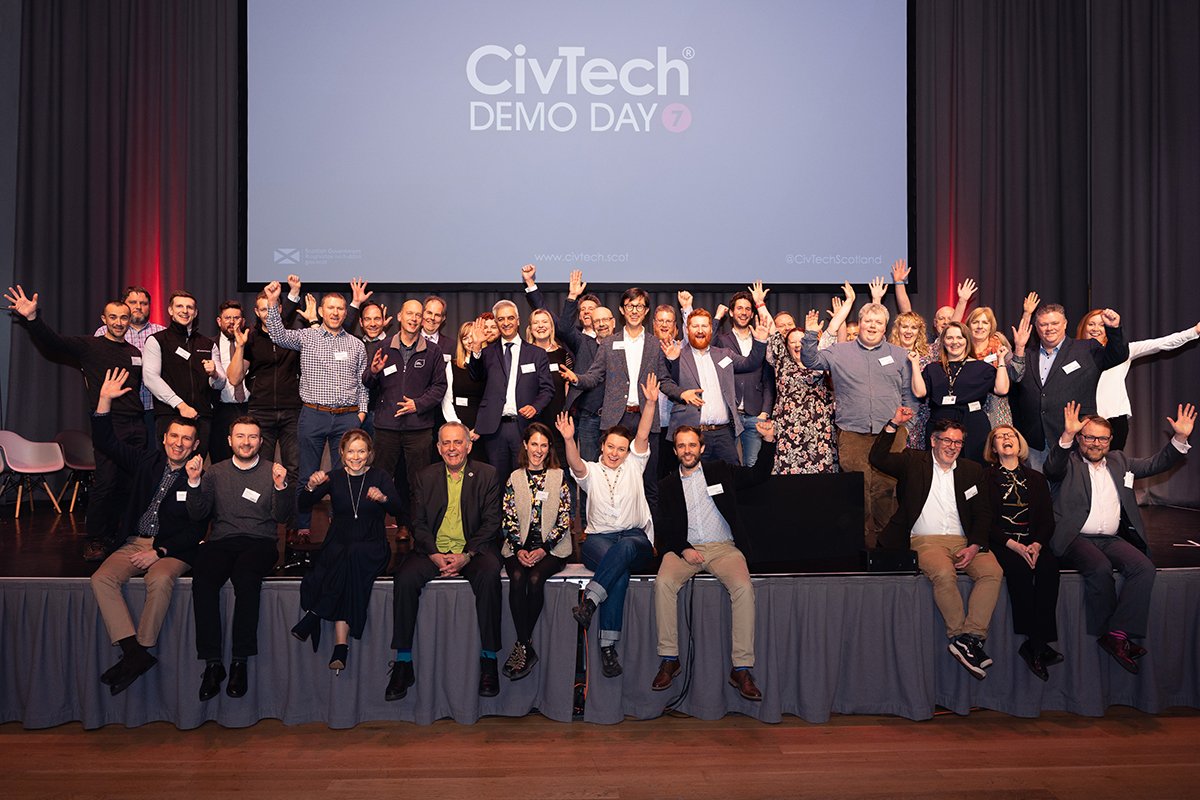
The CivTech team celebrating with the Round 7 cohort at Demo Day 7.
A great team
If it’s not clear from what I’ve just written, we built a great team. People with deep experience of all the componentry we put into the CivTech Innovation Flow – not just the Accelerator itself and the understanding of innovation, but Open Challenges, business growth systems, contract management, and procurement.
That last bit was vital, and the person who got what seemed like a completely new approach to procurement (though it was fully within regulations) deserves a medal: “You can’t procure innovation that way!” some would go. To which she’d reply, “Yes you can”. A thousand times.
Never bet against a determined Scot!
And that kinda leads on to something else that’s a bedrock…
Determination
Early on – even before the get-go – we recognised that only through innovation could we tackle the problems we faced. And those problems were not just Scottish or UK‑based. We were staring at global, existential challenges: the climate emergency, the biodiversity crisis, Disease X, Y and Z, kinetic and cyber warfare, and even trust in government itself.
You get the picture.
But innovation does not come easily to large organisations (and before you front this with ‘public sector’, it’s a problem for big private sector too).
We realised absolutely, the absolute need to innovate. That’s never left us.
The ruthless and relentless focus on delivery
From day one, CivTech was about delivery. A decade ago, that level of focus wasn’t especially familiar across government, but we held to it regardless. I started using the phrase ‘a ruthless and relentless focus on delivery’, and while at first it raised a few eyebrows, it captured exactly what we were trying to do. Over time, I hope this will become embedded not just in our own work but across the public sector. You could say we’ve always been a bit obsessed with delivery - and it’s one of the reasons CivTech has achieved what it has.
A strong culture
But you can’t do all this without a strong team ethos, and we took time and real effort to build one particularly suited to CivTech’s mission. In fact, that word – mission – is the centre of so much of what we do. We are mission-driven, underpinned by a clear set of values that are well articulated and well understood by everyone. And they’re real, in-the-wild values – they effect and affect everything we do. Someone once said to me that they didn’t believe in missions, visions and values. I replied, “That’s because you’ve never seen them done well.” And all the research says that if they are, teams outperform others that do not have them by a country mile.
There’s a little subtext here…
I sometimes get asked why we’re called ‘CivTech Scotland’ and not ‘GovTech Scotland’. The simple reason is that when we started ‘GovTech’ wasn’t a ‘thing’. Then a few years later we were asked to consider changing our name, but we didn’t because while in many ways you could say the two ideas are the same, there’s a really important if subtle difference. GovTech is short for ‘Government Technology’. CivTech on the other hand stands for ‘Civilian’ or ‘Civic Technology’.
Sure, we might be doing Challenges that develop products and services for use by the public sector, but it’s always, primarily, about making people’s lives better.
And you can’t do this without one key element. It’s core to a better society, it’s a fundamental characteristic of human behaviour, and it’s vital to innovation…
Collaboration
This is at the heart of everything we do. We simply couldn’t do what we do without the support of colleagues across the Digital Directorate, the Procurement Directorate, from Ministers, Scotland’s Enterprise Agencies, Centres of Excellence, and initiatives like Interface and Techscaler. Organisations like CodeBase have also played an important role through their ongoing support for the wider ecosystem and the practical collaboration they’ve enabled. None of this would work without our Challenge Sponsors, who put real problems on the table and commit to solving them with us. They’re a crucial part of the ecosystem and central to everything we’ve achieved.

An image from one of our Accelerator events at CodeBase, Edinburgh.
We’re also committed to making Scotland’s innovation ecosystem more inclusive, and our involvement in the Pathways Pledge reflects the importance of widening participation and ensuring more voices are represented across our work.
Then there’s private sector organisations like MBM, Azets and techUK who do so much to help us and the companies on the Accelerator. And the entrepreneurs and investors who gather around us to help – most notably in the CivTech Advisory Group. Plus the major players, who could’ve looked at CivTech and regarded the companies coming out of it as threats but instead decided to embrace the project and offer their considerable firepower to the cause. AWS haven't just supported CivTech - they've poured hugely valuable support into the companies as well. Thank you!
And there’s everyone who engages with us by applying for the Challenges - and not just the companies that got through to the Accelerator. Each and every applicant we’ve ever had has helped to build the CivTech we have today.

Minister for Business, Trade, Tourism and Enterprise Richard Lochhead speaking with teams and Challenge Sponsors during the Round 9 launch — an event that brings our cohort, partners and supporters together.
All of this is - in a world where collaboration and horizontal working isn’t always as pronounced as it should be - a testament to what can be achieved.
And while some might wonder how we’ve managed to achieve this level of collaboration, I’d simply repeat that collaboration, mutually supportive working, is a fundamental component of our human nature. If they seem unfamiliar it’s only because the systems we’ve worked within for decades have tended to suppress those instincts. The same is true of innovation. As a species we’ve been innovating since at least the cognitive revolution seventy or eighty thousand years ago. That modern large organisations struggle to innovate is something I’ve looked at for many years and have very clear ideas about how to fix it. It’s something that may emerge in the form of a culture change initiative in the next year or so, budgets and resources permitting.
Always learning, always evolving
There’s one thing underpinning all of this. In all the progress, in all the achievements, there’s a deep sense of humility across the team. Sure, we’re regarded as the best public sector innovation accelerator in the world, we’re working closely with the Ukraine to build their own CivTech-style system, we’re advising countries across Europe on the open challenge systems we use so they can use them too, and we’re fielding calls from across the world every week. But as much as we’re helping, we’re learning just as much in return. Our partnership with Ukraine is a powerful example of CivTech principles in action globally - shared learning, shared innovation, shared purpose, eyes and ears open, ready to embrace the new.
Because if there’s a single takeaway right now it’s that we have to innovate if we’re going to overcome the challenges at local and world levels. And CivTech proves that the public sector can innovate, can move a speed, and can solve wicked problems. Along with actually delivering better products and services, this is perhaps the most important thing we’ve done. The thing that still gets me, ten years on, is seeing how these solutions make everyday life simpler and safer for citizens. That’s why the work matters.
Back to the deeply personal.
Throughout a pretty long career I’ve been involved in a lot of amazing projects, a lot of outstanding successes, and a lot of firsts. But I have no doubt that when I come to hang up my boots, CivTech will be the thing I’ll be proudest of.
I never expected to become a civil servant. But in my time at CivTech I’ve come to realise that at the heart of public service is a striving to build a world that works, that makes people’s lives better. It’s a privilege to be able to contribute to that.
It’s been one hell of a journey over the last ten years - a rollercoaster, and one with far more ups than downs. But enough of this looking back stuff - like I said, I’m not much one for anniversaries. But if the first ten years proved what's possible, my feeling is the next ten will be about delivering what's vital. My sense is that CivTech has only just begun, and I can’t wait to see what happens next.