
What everyone asks us about CivTech
One thing we’ve learned over the past decade is that CivTech attracts a lot of curiosity. And with new Challenges launching later this summer, that interest is only growing.
We regularly hear from international governments, public bodies and organisations looking to understand how the model works - whether to partner with us, bring forward their own challenges, or explore how it could be adapted in their own context. And the questions they ask are often strikingly similar.
So, we caught up with Mark Elliott, Head of the CivTech Division, to answer some of the most common ones - and share an honest perspective on what makes the model work in practice.
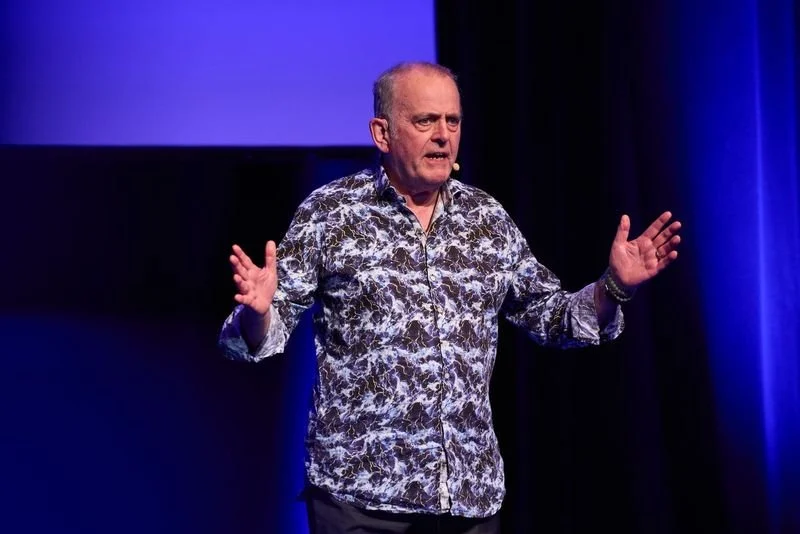
Mark Elliott, Head of the CivTech Division, delivering a speech on stage at CivTech Round 11 Demo Day.
Does CivTech actually lead to real, commercial outcomes?
Yes - and that’s kind of the point.
These days, around 70–80% of companies coming through the Accelerator go on to secure some form of commercial contract. That can mean anything from a pilot extension to full procurement - but the key thing is that it doesn’t stop at a prototype.
What really matters to us is whether companies are still trading and growing 18–24 months later - and again, those numbers are consistently strong.
Are public bodies expected to fund solutions after the Accelerator?
Not formally - but realistically, they need to have a credible pathway to getting there.
A Challenge without a route to adoption isn’t a good Challenge. The most successful ones are where the Sponsor has already had those internal conversations about budget and resource before things even begin.
What happens if a solution turns out to be too expensive?
It does happen, but usually not for the reasons people think.
It’s rarely about the product itself being too expensive - more often it’s budget constraints, shifting priorities, or resource challenges within the organisation. That’s why we focus so much on shaping Challenges properly upfront and being realistic about what can actually be delivered and adopted.
What kind of team do you need to run something like CivTech?
You don’t need a huge team - but you do need the right roles covered.
At a minimum: someone to champion the work, strong procurement expertise, innovation management, and solid programme delivery. When we started, we had a very small team - but what really mattered was that people were willing to get stuck in and work flexibly. It felt much more like a start-up than a traditional public sector programme.

Jiveen MacGillivray, Innovation Manager, speaking with two guests at CivTech Round 11 Demo Day.
What support do companies actually get?
There’s a structured offer, but it’s applied flexibly.
Companies get access to mentoring, commercial and legal guidance, introductions into the public sector, and our Business Growth Workshop programme.
But not every company needs the same thing - so we adapt the support depending on where they are and what they need to grow.
Who owns the IP?
The company - always.
That’s fundamental to the model. If you want to attract the best companies, they need to be building something they can take to market. The public sector gets the solution to its problem and the company keeps the IP and can commercialise it more widely.
How do you handle data access?
Carefully - and early.
One of the biggest lessons we’ve learned is that data access needs to be considered right at the start. Companies can’t build properly if they don’t have access to the right data. So now we treat that as part of Challenge design, not something to figure out later.
Do you get enough companies applying?
Yes - and demand has grown steadily over time.
A strong, well-framed Challenge can attract dozens of applications. But it really comes down to clarity - if the problem is clear and there’s a genuine opportunity, companies respond.

A photo taken during a Challenge Sponsor workshop session at CodeBase, Edinburgh, where Challenge Sponsors met with the CivTech Innovation Team.
Why does CivTech work?
At its best, it’s about collaboration.
This isn’t a traditional client-supplier relationship - it’s people working together to solve real problems. When that works well, you see better solutions, stronger companies, and genuinely meaningful outcomes for the public sector.
Get involved
We’re always on the lookout for public sector organisations with real challenges to solve. If that’s you, or you’re curious about how CivTech could help, just drop us a line at civtech@gov.scot.
With new CivTech Challenges launching later this summer, now is a great time to get involved. If you’re a startup, SME or innovator keen to work with the public sector and build something with real-world impact, we’d love to see you apply. You can stay up to date and find out more by joining our mailing list and following CivTech on social media here.