

There are six steps in the CivTech process


Step 1:
Challenge Definition
Our team works with Scottish public and third sector organisations to turn their problems into ‘Challenges’. We help them clearly define and articulate their problem, become comfortable with our approach to procurement, and how the CivTech process works.
A Challenge is simply a problem which an organisation would like to solve. The Challenge Sponsor — the organisation setting the problem — poses the Challenge as an open question (‘we have this problem, can you find a solution?’), rather than inviting a pre-determined solution (‘we have this problem and we want you to build this answer’). This approach stimulates new ideas and innovation, finding new solutions to seemingly impossible problems — often from unexpected places.
Challenges are quite specific and manageable. We’re not talking about huge infrastructure projects that demand vast teams and millions of pounds to address; we’re talking about things that, with an injection of ingenuity and innovation, can make real and positive improvements to the delivery of a public service — and to people’s lives.
While Challenges are focussed on a specific problem, we also make sure successful solutions have a much wider potential market — which, given the insight and learning you’ll gain on the programme, you’ll be ready to take on.

Step 2:
Launch, Application and Selection
A set of Challenges (usually between five and ten) is announced (usually once a year) and we put out a call for proposals. We call one of these sets a CivTech ‘Round’ — and each Challenge is given its own number.
Responding to a Challenge is an open process with as few limitations as possible. And it’s universal, in the sense that anyone can apply — you don’t even need to have formed a company by this stage.
Together, the CivTech team and Challenge Sponsors assess every written application. We then select the best six per Challenge and invite applicants for an online interview to win one of three places on the Exploration Stage.
You don’t have to be based in Scotland to get in involved — anyone from anywhere can apply. You could be an existing company with a team and a product that is ready to be repurposed to answer the Challenge. Or a group of graduates with a great demo. Or a digital team that’s looking for a great idea to get involved with. Or even the reverse — an individual with no digital background but with real insight into the Challenge, a great idea and plans to build a team around you.

Step 3:
Exploration Stage
The Exploration Stage is three intensive weeks where the selected applicants quickly develop their proposal hand-in-hand with their Challenge Sponsor, and everyone has an opportunity learn more about each other. Teams get paid for this stage and it ends with the resubmission of an updated application, a project plan and a final pitch to the Challenge Sponsors and CivTech. Usually one winning team is invited onto the Accelerator Stage, but occasionally we’ll take more than one through — providing their proposals are different and there’s no direct competition.
The Exploration Stage includes a number of mandatory workshops that all participants are expected to attend, and you must sign the Exploration Stage Terms and Conditions to take part (you’ll be give access to these before applying).
Key information
Duration: 3 weeks
Location: Mostly delivered remotely, but the first day takes place in-person in Edinburgh. Some Challenges may require teams to visit Challenge Sponsors’ facilities or other locations relevant to the Challenge
Payment: £5,000 (plus VAT if applicable) per team
Teams do not have to be formal companies to participate
Intellectual Property must be assigned to an entity of participants' choosing, in order reduce likelihood of later disputes

Step 4:
Accelerator Stage
The Accelerator Stage is a fast-paced fifteen-week period of product development, that sits at the heart of the CivTech process. Teams and Challenge Sponsors come together to produce an MVP: a Minimum Viable Product that demonstrates the original idea will work in practice, and is capable of further development.
There’s a focus on collaborative working and knowledge sharing, to stimulate innovation and maximise the cross-pollination of ideas. We’re big on business development and our comprehensive workshop system means that all teams — whatever stage they’re at — have the best possible grounding to build a successful business around their new products.
Every team that successfully completes the Accelerator will receive £40,000 (plus VAT if applicable), with no hidden charges, and no requirement to give up equity or intellectual property.
Designed by people with extensive experience of start-ups, incubation, growth and accelerators, it has everything you need to succeed. Our workshop programme covers everything you need to know about starting up and growing a tech business as fast and as successfully as possible. The programme is highly flexible too — so whether you’re a compete beginner in terms of business, or an established SME with a new product idea or a product that can be re-engineered, you’ll find plenty of value in what’s on offer.
The CivTech Accelerator also prepares you for working with and winning business from the public sector. With wide-ranging experience of both the public and private sectors on hand, and a deep understanding of how best to work at their intersection, the CivTech Accelerator represents perhaps the most powerful route into a huge, previously hard to enter sector.
Key information
Duration: 15 weeks
Location: Most workshops, meetings and other activities will be delivered remotely, but this Stage will be punctuated by a series of regular, mandatory in-person days in central Scotland. For some Challenges it will be appropriate or necessary for teams to visit Challenge Sponsors’ facilities or other locations
Workshops: Compulsory, unless otherwise agreed in advance
Payment: £40,000 (plus VAT if applicable) per team, paid in four tranches of £8,000 during the Accelerator and a further £8,000 following attendance and presentation at Demo Day
Teams must be set up as formal companies before starting this stage — we strongly recommend seeking legal advice and being prepared for this stage so that payment can be made promptly to a business bank account if participants have formed/are planning to form a new company
Intellectual Property: this will reside with the participating company, but a perpetual royalty-free licence is granted to the Challenge Sponsor to use the IP created
Equity: neither CivTech nor the Challenge Sponsors take any equity in your company
Step 5:
Demo Day
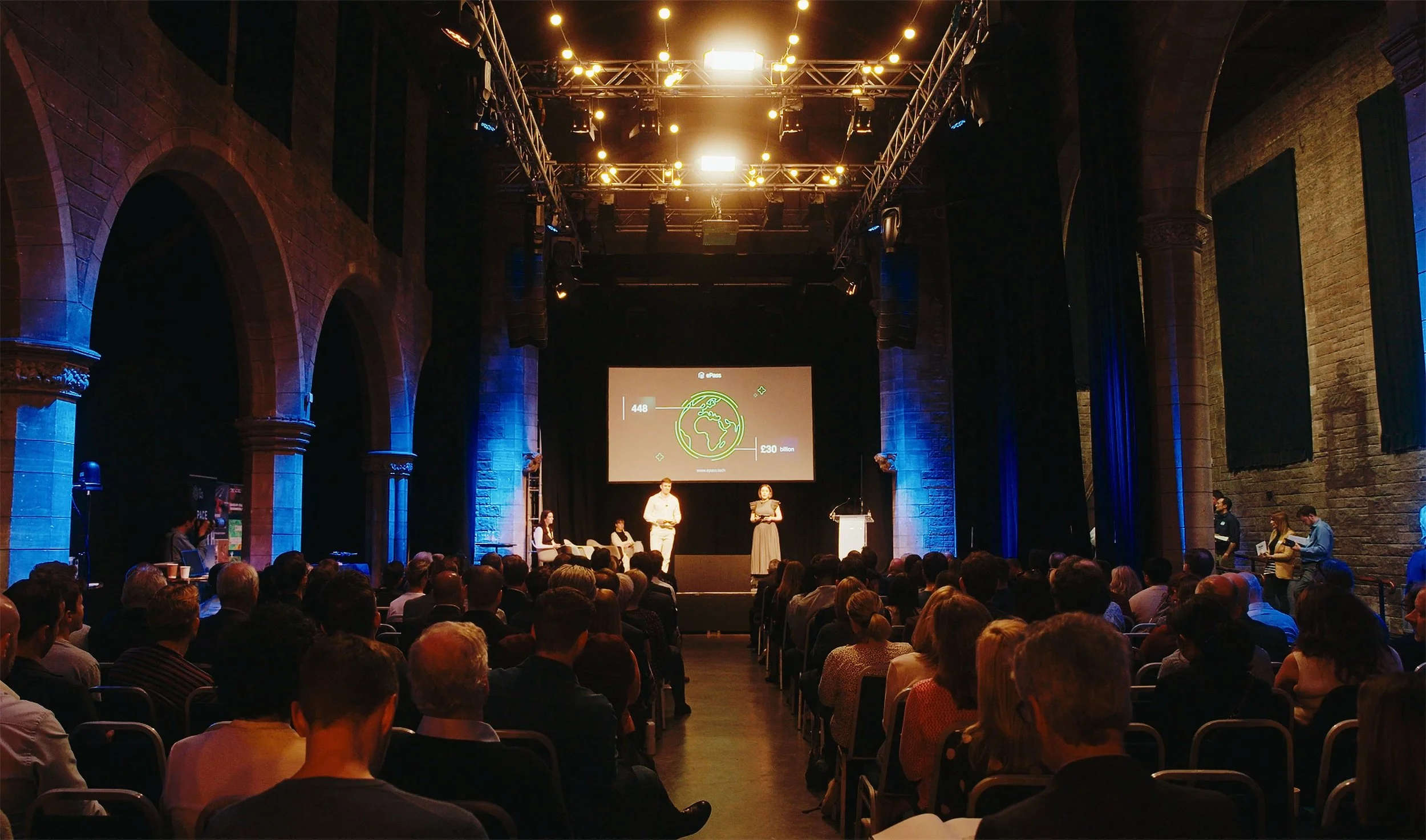
The Accelerator culminates in a Demo Day — but it’s one with a difference.
Whereas most tech accelerator demo days are about teams demonstrating their products (often without market validation) and seeking investment, the CivTech Demo Day is about demonstrating solutions to an audience of genuinely interested people. Remember, each and every product presented is an answer to a problem the public sector has, and we’ve found that if one organisation has this kind of issue, it’s almost certain to be shared by many more.
Not only that, but CivTech teams with successful MVPs are likely to be on their way to a further, larger contract with their Challenge Sponsor, as this is an integrated part of the process. This means that the investors and potential future customers in the room will be looking at MVPs with companies capable of driving them forward as businesses, and a major customer already secured. All of which makes an attractive proposition!

Step 6:
Pre-Commercial Stage
The Pre-Commercial Stage is not guaranteed, however should the Challenge Sponsor, CivTech and the company agree, you’ll have the opportunity to extend your relationship with your Challenge Sponsors, to further develop the solution and roll it out. Once the product is ready to be deployed, the Challenge Sponsor benefits from a perpetual royalty-free licence to use the product to address the problem that sparked the Challenge. Participating companies have been given the best leg-up possible and we expect funding for further commercial development to come from other customers, or private investment. Experience has taught us that this is just the start — many of the teams that successfully complete CivTech win contracts from the wider public sector, and the private sector, as a direct result of the work they’ve done with us.
With a great product, and that vital first customer, we firmly believe businesses coming out of CivTech have the potential to follow the same trajectory. And this is where we can connect participating companies with a wider range of Scottish business support, to help to drive the businesses forward — to their benefit, the citizens’, and the nation's.
The purpose of the Pre-Commercial Stage is to enable you to further develop your product following the Accelerator / Development Stage, to take it from MVP to a commercially viable product. If all parties agree to enter into a pre-commercial agreement, you will be expected to submit a project plan and proposal for Pre-Commercial Stage work (including costs, duration and deliverables) that will then be discussed and negotiated between yourself, your Challenge Sponsors and CivTech.
Key information
Not guaranteed: during the Accelerator, discussions between the Challenge Sponsors, CivTech and the company about a potential pre-commercial stage will begin
Payment: further contracts are normally negotiable up to a maximum value of £595,000 (plus VAT if applicable) per Challenge, but this cap could be lower or higher on certain Challenges — see the individual Challenge pages on our website for details
Intellectual Property: remains with the participating company
Equity: neither CivTech nor the Challenge Sponsors take any equity
Licensing: post-commercial deployment the Challenge Sponsor is entitled to a royalty-free licence
Duration: negotiated with Challenge Sponsor
Location: your choice